

Most Runs in World Cup History: Top 10 All-Time Run Scorers
The ICC Cricket World Cup is the ultimate proving ground for ODI batsmen. Every four years, the world’s finest players gather to compete for cricket’s most prestigious trophy, but only an elite few manage to consistently deliver on this massive stage. If you are curious about which legendary cricketers have accumulated the most runs in World Cup history, you have come to standard ground.
Whether you are settling a debate with a friend, researching a video script, or trying to understand how modern greats compare to past icons, this comprehensive guide covers everything. You will learn about the all-time leading run-scorers, the most dominant individual tournament campaigns, and the unique tactical shifts that allowed these players to dominate global bowling attacks.
The All-Time Leaderboard: Most Runs in World Cup History
To achieve longevity in World Cup cricket, a batsman requires exceptional technique, immense mental fortitude, and the ability to handle high-pressure knockout games. The table below outlines the top ten batsmen who have scored the most runs in World Cup tournaments since the inaugural edition in 1975.
| Player | Matches | Total Runs | Average | Highest Score | 100s / 50s | ||
|---|---|---|---|---|---|---|---|
| Sachin Tendulkar | 45 | 2,278 | 56.95 | 152 | 6 / 15 | ||
| Virat Kohli | 37 | 1,795 | 59.83 | 117 | 5 / 12 | ||
| Ricky Ponting | 46 | 1,743 | 45.86 | 140* | 5 / 6 | ||
| Rohit Sharma | 28 | 1,575 | 60.57 | 140 | 7 / 6 | ||
| Kumar Sangakkara | 37 | 1,532 | 56.74 | 124 | 5 / 7 | ||
| David Warner | 29 | 1,527 | 56.55 | 178 | 6 / 5 | ||
| Shakib Al Hasan | 36 | 1,332 | 41.62 | 124* | 2 / 11 | ||
| Brian Lara | 34 | 1,225 | 42.24 | 116 | 2 / 7 | ||
| AB de Villiers | 23 | 1,207 | 63.52 | 162* | 4 / 6 | ||
| Chris Gayle | 35 | 1,186 | 35.93 | 215 | 2 / 6 |
Deep Dive: The Top 5 Run Scorers Analyzed
1. Sachin Tendulkar (India) – 2,278 Runs
Sachin Tendulkar remains the undisputed king of World Cup cricket. Spanning six tournament editions from 1992 to 2011, “The Little Master” defined consistency across two different decades.
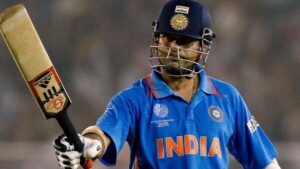
Tendulkar was more than just a volume scorer; he was a big-match player. He was the tournament’s highest run-scorer in both 1996 and 2003. His legendary 673 runs in the 2003 tournament stood as the single-edition gold standard for twenty years.
Read more:
https://cricalien.com/icc-womens-t20-world-cup-prize-money/
2. Virat Kohli (India) – 1,795 Runs
Virat Kohli has elevated chasing and run accumulation to an art form. Renowned for his meticulous physical preparation and precise strokeplay, Kohli has consistently anchored the Indian top order across four World Cup campaigns (2011, 2015, 2019, and 2023).
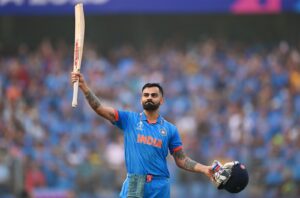
Kohli’s defining World Cup legacy came in the 2023 tournament on home soil, where he displayed unparalleled mastery over modern ODI bowling units, breaking multiple milestone scoring marks along the way.
3. Ricky Ponting (Australia) – 1,743 Runs
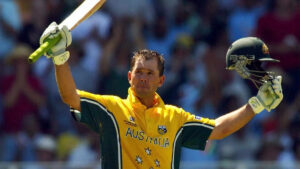
Australia’s most successful captain was also their most reliable number three batsman. Ricky Ponting’s aggressive style and exceptional pull shot allowed him to anchor a dominant Australian side that went undefeated in the 1999, 2003, and 2007 tournaments. His career highlight remains a blistering, unbeaten 140 against India in the 2003 final at Johannesburg.
4. Rohit Sharma (India) – 1,575 Runs
Rohit Sharma boasts an incredibly high century-to-innings ratio in World Cup history. Known for his ability to hit effortless sixes, the Indian opening batsman has rewritten the history books by scoring a record seven World Cup centuries in just 28 innings.
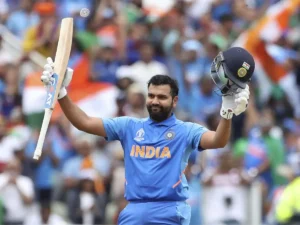
His 2019 campaign in England was a masterclass in opening batting, resulting in five centuries within a single tournament.
5. Kumar Sangakkara (Sri Lanka) – 1,532 Runs
The elegant left-handed wicketkeeper-batsman from Sri Lanka combined class with supreme situational awareness.
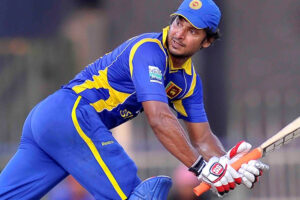
Kumar Sangakkara’s finest hour arrived during the 2015 World Cup in Australia and New Zealand, where he accomplished the rare feat of hitting four consecutive centuries.
Most Runs in a Single World Cup Edition
While lifetime aggregates show longevity, checking single-tournament spikes reveals what happens when a world-class batsman hits peak form. Let’s look at the elite individual campaigns in World Cup history:
The Ultimate Masterclass: Virat Kohli (2023)
When it comes to sheer, unadulterated dominance across a single tournament, Virat Kohli’s 2023 campaign stands completely alone.
Playing on home soil, Kohli did not just break Sachin Tendulkar’s record—he completely shattered it. Over 11 matches, Kohli anchored the Indian batting lineup with a mind-boggling average of 95.62, crossing the 50-run mark nine times in 11 innings. He finalized his historic run in the semi-finals against New Zealand at the Wankhede Stadium, scoring his 50th ODI century and cementing a new gold standard that will likely take decades to challenge.
Read more:
https://cricalien.com/who-is-matt-boyle-the-rising-star-of-new-zealand-cricket/
Breaking Down the Legendary Campaigns
1. Sachin Tendulkar (2003) — 673 Runs
Long before heavy bats, powerplays, and T20-fueled scoring rates changed the ODI landscape, Sachin Tendulkar put on an absolute clinic in South Africa. Armed with his iconic heavy willow, his standard-setting knock of 98 against Pakistan remains one of the greatest World Cup innings ever played.
2. Matthew Hayden (2007) — 659 Runs
If Tendulkar brought artistry and Kohli brought surgical precision, Matthew Hayden brought brute force. In the Caribbean sun during the 2007 edition, “Haydos” walked out with a mission to destroy bowling attacks from ball one. Striking at an incredible 101.07, his three centuries single-handedly powered Australia to an undefeated, tournament-winning campaign
3. Rohit Sharma (2019)
Rohit Sharma’s 2019 tournament in England was pure elegance. While he fell just short of Tendulkar’s overall tally at the time, he achieved something no other player has ever done: scoring five centuries in a single World Cup edition. Every time Rohit walked out to open, a hundred felt completely inevitable.