

How Does Swing Bowling Works in Cricket?:full guide
If you have ever found yourself watching a match and wondering, how does swing bowling works in cricket, you are not alone. Even many club cricketers understand what to do without fully grasping the fluid dynamics behind why it happens. Understanding these mechanics is the ultimate gateway to mastering control over the ball, whether you are an aspiring quick or a passionate fan trying to read the game like an expert analyst. This guide will deconstruct the science, the grip, and the physical art behind traditional and reverse swing bowling.
- 1. The Basic Physics: How Does Swing Bowling Work in Cricket?
- 2. The Anatomy of a Cricket Ball: Shiny Side vs. Rough Side
- 3. Mastering Traditional Swing: Conventional Inswing and Outswing
- 4. The Hidden Art of Reverse Swing Bowling
- 5. Environmental Factors: Clouds, Wind, and Heavy Air
- 6. Frequently Asked Questions (FAQs)
1. The Basic Physics: How Does Swing Bowling Works in Cricket?
To answer how does swing bowling work in cricket, we have to look closely at fluid dynamics—specifically, how air flows around a sphere moving at high speed.
When a bowler releases a cricket ball, air rushes past it from front to back. This flow of air forms a thin layer along the surface of the ball called the boundary layer. This boundary layer can move in two distinct ways:
- Laminar Flow: Smooth, orderly, and streamlined air movement.
- Turbulent Flow: Chaotic, swirling, and rough air movement.
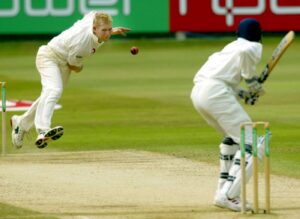
Turbulent air is higher energy air; it clings to the curvature of the ball slightly longer before breaking away. This delay creates an aerodynamic imbalance. Because the air breaks away later on one side, it produces a low-pressure pocket on that specific side. According to the laws of physics, the ball is naturally pushed away from high pressure and pulled directly toward the low-pressure pocket, causing it to curve sideways through the air.
Read more:
https://cricalien.com/who-is-matt-boyle-the-rising-star-of-new-zealand-cricket/
2. The Anatomy of a Cricket Ball: Shiny Side vs. Rough Side
A standard cricket ball features a raised, interlocking stitched leather seam running right down its center. This seam acts as a natural tripwire for passing air currents.
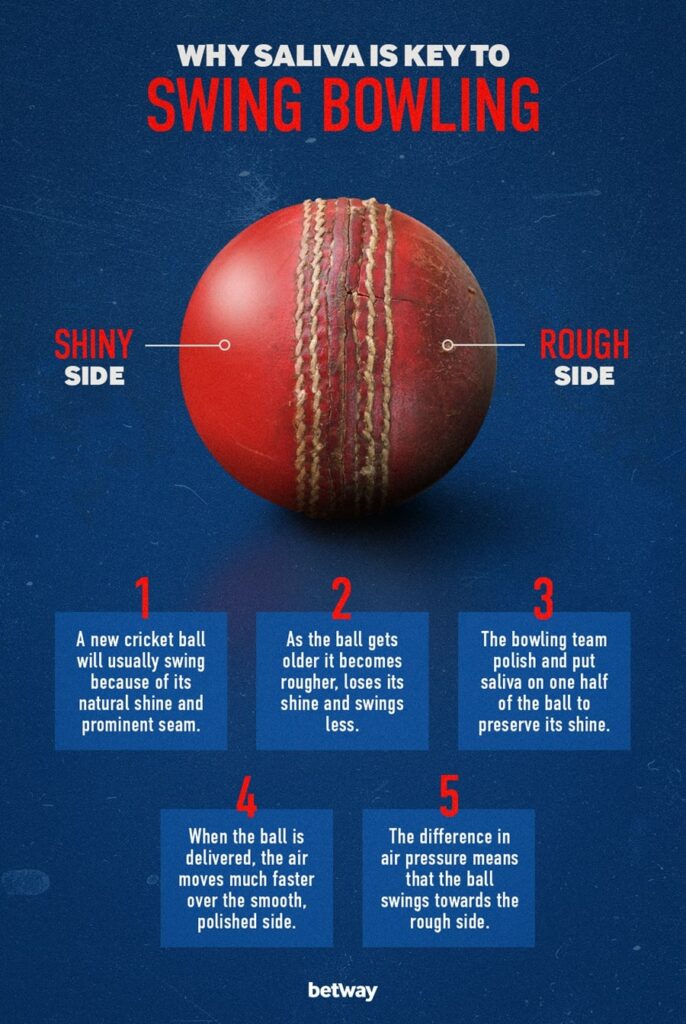
To generate standard swing bowling conditions, the fielding team must carefully look after the ball. They deliberately polish one side with sweat while allowing the other side to naturally degrade, scuff, and become rough through impact with the pitch and outfield. The use of saliva has been heavily restricted under updated playing conditions enforced globally by the International Cricket Council.
The Role of the Seam
When you bowl a conventional swing delivery, you angle the seam slightly toward the direction you want the ball to move. As smooth air passes over the shiny side, it remains laminar and detaches early. On the opposite side, the air strikes the angled, raised seam. The seam trips the smooth air, forcing it to transform instantly into turbulent air. This turbulent air hugs the ball further along its backside, resulting in late separation, lower pressure, and lateral movement.
3. Mastering Traditional Swing: Conventional Inswing and Outswing
Conventional swing occurs most prominently when the cricket ball is relatively new, pristine, and retains its factory glaze.
How to Bowl an Outswinger
The outswinger drifts away from a right-handed batter toward the slip cordon. To execute it:
- The Grip: Place your index and middle fingers close together across the seam, aligning the central seam slightly angled toward first or second slip.
- The Thumb: Rest your thumb directly along the bottom seam underneath.
- The Release: Keep your wrist locked. At release, ensure the shiny side faces the batter on the inside, while the rougher or seam-angled side faces out toward the slips.
How to Bowl an Inswinger
The inswinger snakes back into the body of a right-handed batter, aiming directly for the pads or stumps.
- The Grip: Angle the central seam slightly inward toward fine leg or the batter’s leg stump.
- The Position: Ensure the shiny side faces outward toward the off-side.
- The Release: Drive your fingers through the delivery, maintaining a strong, upright wrist posture so the ball spins along the angled seam axis.
If you are looking to refine your run-up pacing or spatial awareness to complement your release mechanics, check out our related internal guides covering intermediate bowling workloads and modern field placements.
4. The Hidden Art of Reverse Swing Bowling
As a leather ball gets old (usually past 35 to 40 overs of heavy use), the dynamic flips entirely. This phenomenon is known as reverse swing. It is one of the most lethal weapons in a fast bowler’s arsenal because it acts in the exact opposite direction of traditional aerodynamics.
Read more:
https://cricalien.com/most-runs-in-world-cup-history-top-10-all-time-run-scorers/
Why Does It Reverse?
With old balls, even the “shiny” polished side becomes covered in tiny microscopic dents and abrasions, while the rough side becomes deeply cratered and light. Because both sides are now rough, the air passing over both hemispheres converts into turbulent air. However, because the heavily scuffed rough side is so uneven, the air layer separates incredibly early. Meanwhile, the slightly smoother “shiny” side holds onto its turbulent layer just a fraction longer. The low-pressure zone shifts back toward the shiny side, causing the ball to unexpectedly move toward the shiny side.
| Aerodynamic Metric | Conventional Swing Conditions | Reverse Swing Conditions |
|---|---|---|
| Primary Ball State | New to semi-new (1 to 25 overs) | Old and highly worn (35+ overs) |
| Direction of Movement | Towards the rough/scuffed side | Towards the shiny/smoother side |
| Critical Factor | Seam angle orientation acts as primary catalyst | Asymmetry of microscopic surface roughness |
5. Environmental Factors: Clouds, Wind, and Heavy Air
Ask any seasoned opening bowler at a local club, and they will tell you that the weather plays a massive role in how effectively a ball shifts in flight.
Conversely, hot, dry days with turbulent crosswinds can disrupt the boundary layer prematurely, making it difficult to find consistent movement. For a deep dive into reading pitch conditions, check out the environmental physics research published by NASA’s Ames Research Center, which extensively covers aerodynamic boundary layers on textured spheres.
6. Frequently Asked Questions (FAQs)
Conclusion: Practice Makes Perfect
Understanding the underlying physics of how does swing bowling work in cricket is an invaluable asset, but translating it into wickets requires consistency on the training tracks. Developing a stable wrist position, maintaining the ball’s condition legally with your teammates, and adapting to the atmospheric conditions of the day are skills built through repetition.
Ready to level up your entire game? Explore our step-by-step breakdown on master-class bowling release drills or book a consultation with our certified fast-bowling coaches today to analyze your action frame-by-frame.