

ICC Women’s T20 World Cup Prize Money Revealed: Complete Details
- 1. The Big Picture: A Record-Breaking Total Prize Fund
- 2. How the Tournament Structure Impacts Total Earnings
- 3. The Complete Prize Money Breakdown
- 4. The Path to Equity: Comparing Men’s and Women’s Cricket Payouts
- 5. Group Stage Incentives and Minimum Guarantees
- 6. Frequently Asked Questions (FAQs)
- 7. Conclusion: What This Means for the Future of Women’s Cricket
The International Cricket Council (ICC) recently announced a record-breaking prize fund for the upcoming pinnacle event in England and Wales. With the ICC Women’s T20 World Cup prize money revealed, the global cricket community is looking closely at how these numbers mark a historic step toward total gender pay parity in sports.

For fans, analysts, and players alike, the substantial boost in the prize money pool reflects the skyrocketing global popularity, broadcasting value, and competitive quality of the women’s game. Whether you are tracking your favorite team’s potential earnings or looking into how the financial rewards are distributed across the tournament stages, this complete breakdown covers every financial milestone of the historic tournament.
The Big Picture: A Record-Breaking Total Prize Fund
The ICC has officially unveiled an overall tournament pool of $8,764,615 (approximately ₹82 crore) for the upcoming iteration of the tournament. This total prize money injection represents an impressive 10% increase over the previous edition, which was held in the United Arab Emirates (UAE).
This financial evolution highlights the governing body’s strategic commitment to fueling the sport’s economic engine. By placing a larger financial premium on elite international success, local cricket boards are incentivized to invest heavily in their domestic structures, creating a sustainable talent pipeline worldwide.
The expansion of the global tournament format is also driving this budget scale-up. As more competitive nations enter the fray, the commercial viability, broadcasting rights packages, and venue ticket sales have hit historic highs, creating a healthy feedback loop that directly rewards the competing athletes.
How the Tournament Structure Impacts Total Earnings
The allocation of the prize money is fundamentally linked to a major structural shift in the competition layout. For the first time in its history, the showpiece event is expanding from 10 competing nations to 12 participating teams.
Scheduled to take place across seven iconic venues in England and Wales, the tournament will feature 33 matches of highly intense, fast-paced cricket. With the grand final set for the historic Lord’s Cricket Ground, the stakes—both athletic and financial—have never been higher.
The 12 qualified teams have been divided into two groups of six:
- Group A: Australia, India, South Africa, Bangladesh, Pakistan, and the Netherlands.
- Group B: England, New Zealand, West Indies, Sri Lanka, Ireland, and Scotland.
Because more teams are competing in an increased number of fixtures, the ICC had to carefully calibrate its financial distribution framework to support long-term parity. This ensures that smaller, emerging associate nations receive a fair financial baseline to support their operations.
The Complete Prize Money Breakdown
The financial rewards are scaled meticulously according to tournament progression. The further a squad advances through the high-pressure knockout phases, the more lucrative their ultimate payday becomes.
The champion of the tournament stands to walk away with a life-changing windfall, while the second-place finishers are also heavily rewarded for their journey to the grand finale. The structured distribution for the teams according to the official ICC framework is outlined below:
| Tournament Finishing Position | Payout per Team (USD) | Equivalent Payout (INR Approx.) |
|---|---|---|
| Champions (Winners) | $2,340,000 | 21.8 Crore |
| Runners-Up | $1,170,000 | 10.0 Crore |
| Losing Semi-Finalists (2 Teams) | $675,000 each | 6.29 Crore each |
| Group Match Win (Per Victory) | $31,154 | 29 Lakh |
| Minimum Assured Participation Base | $247,500 | 2.06 Crore |
Key Takeaway: A dominant, undefeated run through the group stages combined with lifting the trophy can push a team’s cumulative performance bonuses significantly higher than the base winner’s check.
The Path to Equity: Comparing Men’s and Women’s Cricket Payouts
For generations, the vast divide in commercial compensation between men’s and women’s professional sports has been a major point of discussion. However, the newly confirmed figures reinforce a profound shift towards true gender financial parity.
The current prize money setup aligns closely with the equal prize-matching initiative initially mapped out by the ICC during its annual board meetings. By matching the baseline payouts for equivalent tournament milestones across both parallel sectors, cricket is establishing itself as a global leader in progressive sporting governance.
This change means that a victory on the world stage holds identical financial weight, regardless of gender. This commercial equity is crucial for inspiring the next generation of female athletes, proving that a professional career in cricket offers elite financial security alongside top-tier athletic prestige.
Group Stage Incentives and Minimum Guarantees
One of the most praised aspects of the updated financial policy is the protection given to emerging cricket programs. Navigating a major tournament can be an expensive logistical challenge for smaller cricket boards, which is why the baseline guarantees are so vital.
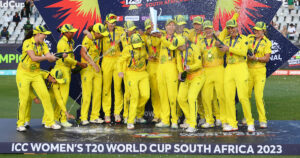
Every single one of the 12 participating teams is guaranteed a minimum payout of $247,500 (roughly ₹2.06 crore), simply for qualifying and stepping onto the field. This cushion ensures that no nation leaves empty-handed, covering high-performance training camps, travel overheads, and specialist coaching staffs.
Furthermore, the ICC has maintained a performance-driven bonus system for the group phase. Every single match victory in the initial stage awards the winning side an extra $31,154 (around ₹29 lakh). This incentive eliminates dead rubbers—matches late in the group stage where teams can no longer mathematically qualify for the semi-finals—ensuring every ball bowled remains intensely competitive.
Read more:
https://cricalien.com/who-is-matt-boyle-the-rising-star-of-new-zealand-cricket/
For comprehensive match schedules, player rosters, and live broadcast details as the competition approaches, fans can consult official cricket portals like the International Cricket Council (ICC) or view detailed domestic breakdowns via trusted regional sports desks like The Times of India Sports.
Frequently Asked Questions (FAQs)
Conclusion: What This Means for the Future of Women’s Cricket
The financial updates surrounding this global event represent far more than simple spreadsheet adjustments; they mark a massive shift in how women’s athletics are valued globally. By creating a record-breaking multi-million dollar pool, the sport is actively professionalizing its ranks from top to bottom.
With substantial baseline protections and highly lucrative incentives for the ultimate winners, this balanced distribution framework ensures the tournament will showcase world-class quality at every stage. The financial growth matching the elite skills on display sets up a highly entertaining summer of cricket.
To stay updated on changing team line-ups, tournament previews, and key tactical strategies, explore our comprehensive cricket strategy guides and domestic championship deep-dives. Let us know your thoughts in the comments below: which squad do you think will claim the historic top prize at Lord’s?