

The Ultimate Evolution of the Cricket Bat: From Hockey Sticks to Modern Powerhouses
Have you ever wondered why a modern cricket bat looks the way it does? If you were to transport a 21st-century power-hitter back to the 1700s, they wouldn’t just be confused by the lack of helmets and boundary ropes—they would barely recognize the equipment.
In the earliest days of the sport, a player did not walk out with a beautifully pressed piece of English Willow sporting a thick spine and massive edges. Instead, they wielded something resembling a modern field hockey stick.
The long history and evolution of cricket bat design is not just a tale of changing tastes. It is a story of shifting tactics, technological breakthroughs, and a continuous battle between the lawmakers of the game and the batsmen trying to gain an edge. Whether you are a casual fan or a seasoned opening batter, understanding this journey will completely change how you view your modern blade. In this comprehensive guide, we will unpack exactly how the willow transformed across four centuries to reshape the sport of cricket.
The 18th Century: The Hockey Stick Era
To understand the roots of the cricket bat, we have to look back at how bowlers used to deliver the ball. In the early 1700s, overarm bowling did not exist. Bowlers bowled underarm, skimming or rolling the ball along the ground toward the batsman.
Because the ball was traveling low and along the turf, batsmen needed a tool that could effectively sweep the ball away. The solution was a heavy, curved piece of wood, crafted from a single chunk of timber (often local hardwoods like ash or oak). The weight was concentrated heavily at the bottom curve of the blade.
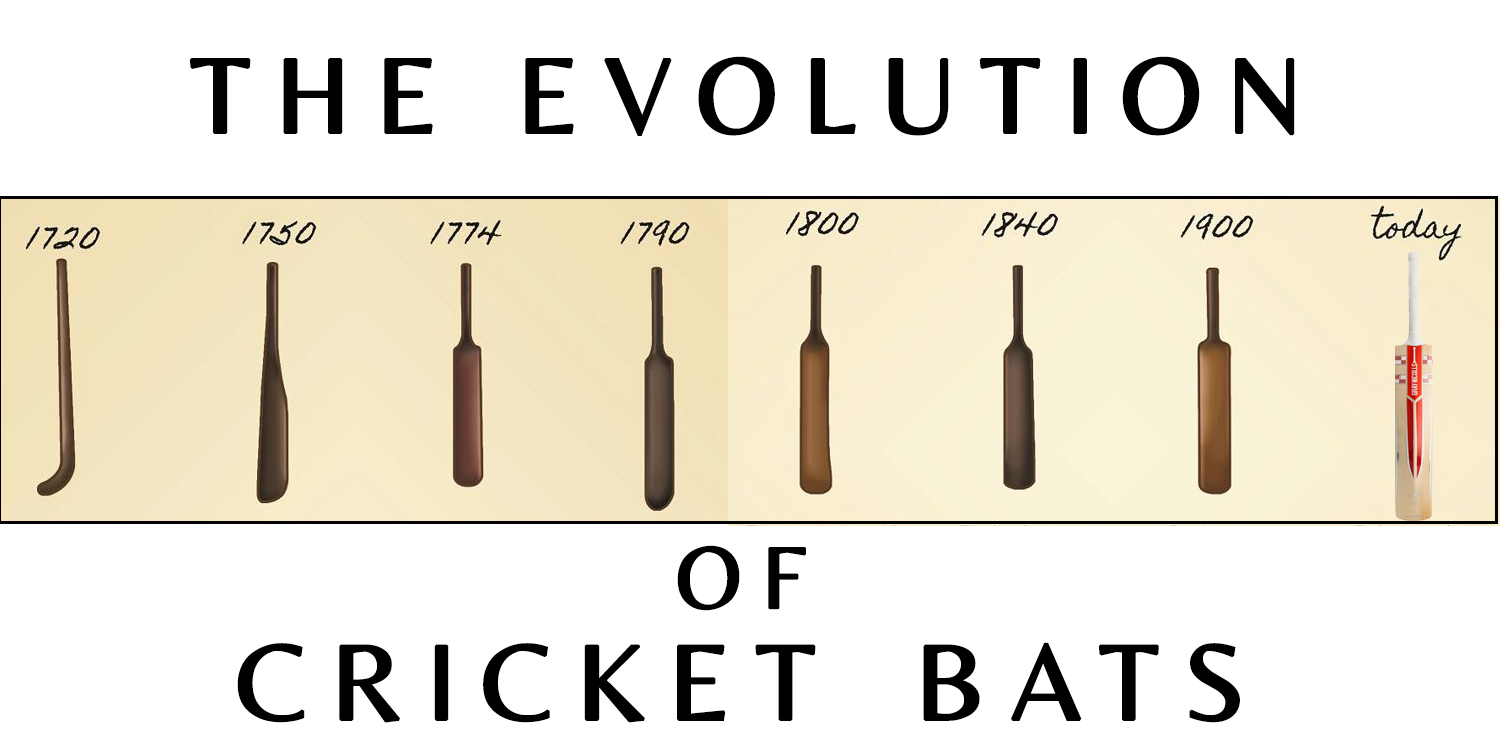 Evolution of the cricket bat shape over the centuries
Everything changed around the 1760s and 1770s when the famous Hambledon Club began experimenting with pitched delivery bowling. Instead of rolling the ball, bowlers began pitching it through the air. This shifted the dynamics of batting completely. Suddenly, players had to contend with bounce, variation, and length.
The heavy, curved bottom of the old sticks became a massive liability. Batsmen needed a straight blade that could defend, drive, and meet the ball vertically. By the late 1770s, the curved stick was obsolete, replaced by a recognizably flat, straight-faced bat.
To explore the deeper history of early match regulations from this era, you can review the archives maintained by the Marylebone Cricket Club (MCC), the traditional custodians of the game’s laws.
Read more:
https://cricalien.com/who-is-matt-boyle-the-rising-star-of-new-zealand-cricket/
The 19th Century: Going Straight and Splice Innovation
As the straight cricket bat became the industry standard, players encountered a massive structural flaw: vibration and breakage. Early straight bats were still carved from a single piece of wood. When a fast delivery struck the hands, it sent jarring shockwaves up the handle, often splintering the bat entirely.
The Invention of the Spliced Cane Handle
In the 1830s, bat makers hit upon a revolutionary idea that remains the foundation of bat manufacturing today: the two-piece bat. Instead of a single piece of wood, builders began crafting the blade and the handle separately.
- The Blade: Crafted almost exclusively from lightweight, shock-absorbing English Willow (Salix alba caerulea).
- The Handle: Built using strips of cane layered with pieces of natural rubber (indiarubber).
The handle was then fitted into the blade using a V-shaped groove called a splice. This design changed everything. The cane handle acted like a shock absorber, absorbing the impact of the ball and allowing batsmen to play aggressive shots without the fear of shattering their equipment.
Sizing and the First Legendary Controversies
As bats became more refined, players looked for any competitive advantage they could find. In 1771, a batsman named Thomas “Shock” White walked out to play a match with a bat that was wider than the entire wicket structure, making it physically impossible to bowl him out.
This extreme tactic forced the game’s governing bodies to step in immediately. They introduced a strict rule stating that a bat could be no wider than 4.25 inches. To enforce this, officials created a metal gauge (often called the “monster bat gauge”) that the bat had to slide through before a match.
The 20th Century: Standardisation and the Commercial Boom
By the mid-1900s, the production of the cricket bat moved from small, localized workshops to large-scale commercial manufacturing. The focus shifted away from raw structural changes toward precision drying, pressing, and grain alignment.
| Era / Decade | Dominant Bat Characteristic | Key Operational Driver |
|---|---|---|
| 1930s – 1950s | Light weight (2lb 2oz – 2lb 4oz), thin profiles | Focus on elegant, wristy back-foot play and traditional test matches. |
| 1960s – 1970s | Introduction of protective coverings and heavy blades | Rise of one-day limited-overs cricket requiring faster run-rates. |
| 1979 | The Dennis Lillee aluminum experiment | An attempt to introduce non-wood materials, quickly banned by the MCC. |
The Infamous Aluminium Bat Incident
In December 1979, Australian fast bowler Dennis Lillee walked onto the pitch during a Test match against England wielding an aluminum bat named the “ComBat”. While it was a brilliant marketing stunt, it caused an immediate uproar.
The ball made a metallic clanging sound upon impact, and England captain Mike Brearley complained that the metal edge was actively damaging the leather ball. After an animated on-field argument, Lillee was forced to throw the metal bat away and return to traditional willow. This event permanently cemented willow as the unchallengeable material of the sport.
The 21st Century: Monstrous Edges and T20 Dynamics
If you compare a bat used by Sir Vivian Richards in the 1980s to one used by modern power-hitters today, the visual difference is staggering. The modern cricket bat has evolved into a hyper-engineered power tool.
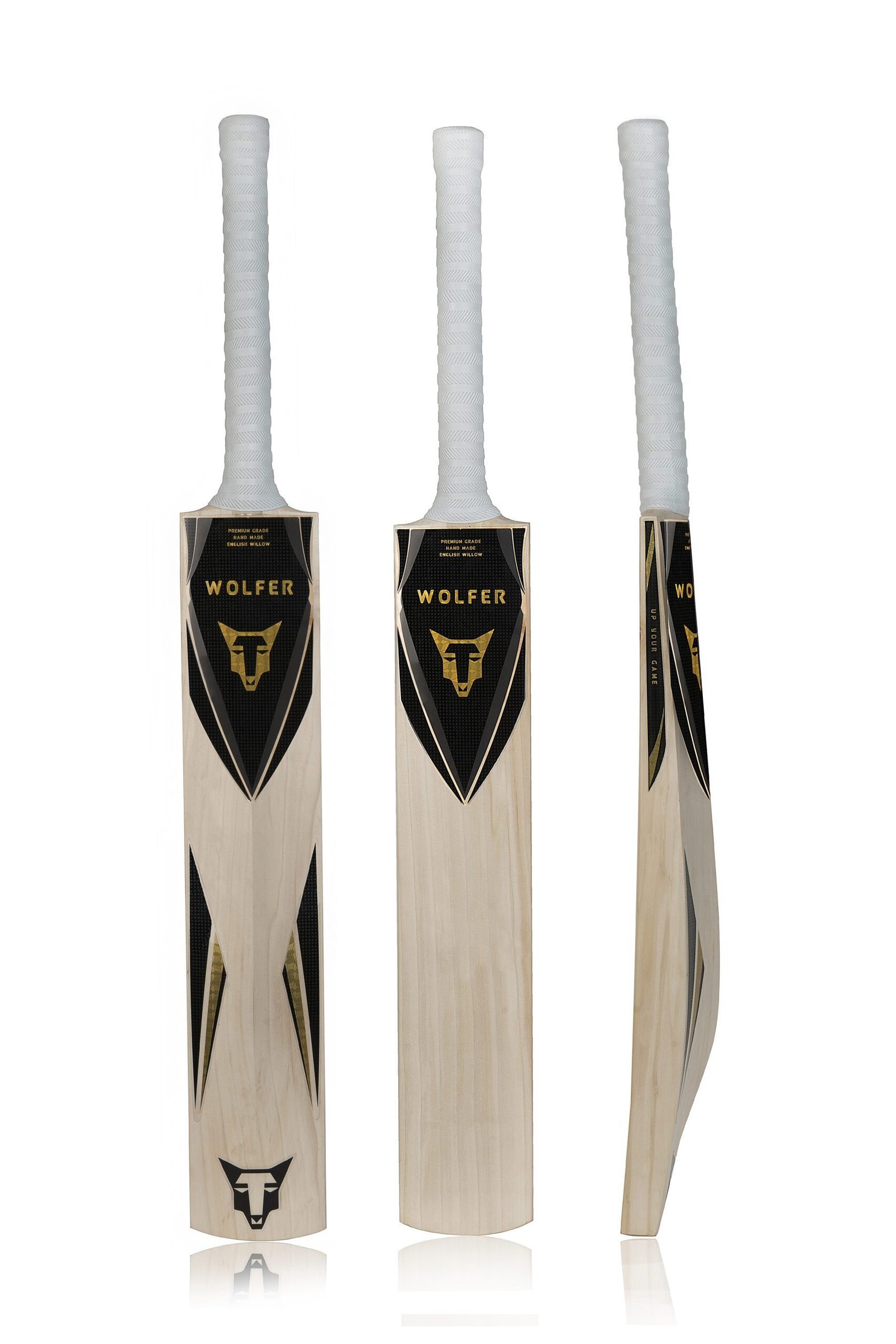 A high-performance modern cricket bat with substantial edge density
Historically, a heavy bat meant a slow pick-up. If a blade had thick edges, it weighed a ton. However, modern drying techniques and pressing machines allow bat makers to remove moisture from the willow far more efficiently.
This development allows creators to construct bats with:
- Massive 38mm to 40mm edges
- Deep, protruding spines
- An incredibly light “pick-up” weight (often just 2lbs 8oz to 2lbs 10oz)
The sweet spot—the area of the blade that transfers maximum energy to the ball—has expanded dramatically. In the modern era, even a mistimed edge off the toe of the bat can easily fly over the boundary ropes for a six. This design evolution directly fueled the global explosion of fast-paced T20 tournaments.
How Law 5 Rules Restrained Bat Makers
As boundaries started shrinking due to these hyper-powered willow designs, the balance between bat and ball swung heavily in favor of the batsman. Bowlers felt helpless as even basic defensive mis-hits cleared fielders with ease.
To restore competitive balance to the game, the MCC updated Law 5 of the official Laws of Cricket in October 2017. These updated dimensions remain strictly enforced across all professional levels today:
- Maximum Width: 4.25 inches (10.8 cm)
- Maximum Depth (Spine): 2.64 inches (6.7 cm)
- Maximum Edge Thickness: 1.57 inches (4.0 cm)
Just like the 18th-century “monster bat gauge,” modern umpires use an official measuring gauge before elite matches to ensure that no player is using an oversized weapon.
Read more:
https://cricalien.com/8-young-stars-to-watch-out-for-in-womens-t20-world-cup-in-2026/
To review the precise physical testing protocols used by international match officials today, check the equipment standards outlined on the International Cricket Council (ICC) Official Site.
Frequently Asked Questions
Why are cricket bats made of willow instead of other woods?
English Willow (Salix alba caerulea) is uniquely suited for cricket because it is naturally incredibly lightweight yet highly fibrous and resilient. When compressed correctly by a bat maker, it offers high impact resistance without becoming too heavy for a player to swing comfortably.
What is the difference between English Willow and Kashmir Willow?
English Willow is grown in wet, cool UK climates, resulting in a softer wood with tighter grains, which offers superior spring and punch (“ping”). Kashmir Willow is grown in India; it is denser, tougher, drier, and heavier, making it an affordable, durable option for beginners but less preferred by international pros.
Why do players “knock in” their new bats?
Knocking in is the process of compacting the loose outer fibers of a new willow blade using a leather mallet. This hardens the surface layer, protecting the wood from cracking or snapping when struck by a hard leather cricket ball.
Conclusion
The evolution of cricket bat design reflects the dynamic journey of the sport itself. From its humble origins as a curved wooden crook meant to sweep underarm rollers, it has transformed into a highly engineered, regulated marvel of modern sports science. While rules will continue to adapt to keep the game balanced, the foundational marriage of English willow and cane handles remains an enduring element of cricketing tradition.
Are you looking to buy a new blade or restore an old favorite? Take a look at our comprehensive Step-by-Step Guide to Knocking In and Oiling Your Willow to make sure your gear performs perfectly on match day.