

The Ultimate Guide to the ICC Cricket World Cup Trophy: Price, History, and Hidden Details
For millions of cricket fans around the globe, there is no better sight than the ICC Men’s Cricket World Cup trophy. Seeing a victorious captain hoist that gleaming silver and gold masterpiece toward the sky is the absolute pinnacle of the sport.
But while we all recognize its iconic silhouette, few fans know the deeper mechanics behind it. How much does the cricket world cup trophy actually cost to make? What is it made of? And how did a tournament that used to change its prize every single decade finally land on this permanent, timeless design?
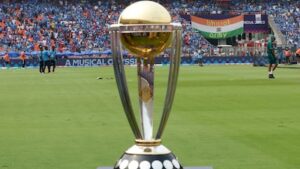
Whether you are settling a debate with friends or diving deep into cricket trivia, this expert guide breaks down everything you need to know about cricket’s holy grail—from its monetary value and intricate craftsmanship to its complete evolutionary history.
The Anatomy of a Masterpiece: Weight, Size, and Hidden Meaning
Before we look into its financial value, it is essential to appreciate what the official cricket world cup trophy actually is. Introduced ahead of the 1999 tournament, the modern trophy is an engineering marvel designed to capture the core spirit of the game.
Dimensions and Materials
The current permanent trophy was designed and manufactured in London by a team of elite master craftsmen at Garrard & Co (the historic Crown Jewellers), taking over two full months to perfect.
- Height: It stands exactly 60 centimeters (approx. 24 inches) tall.
- Weight: It weighs a substantial 11.05 kilograms (roughly 24.3 pounds), making it a true heavyweight prize that players definitely feel in their arms when lifting it on the podium.
- Composition: The abstract structural columns are forged from high-grade sterling silver, while the stunning central sphere is heavily plated in yellow gold.
Deep Symbolism Explained
The design isn’t just flashy for the sake of it; every curve has a distinct meaning. The trophy features three silver pillars supporting a golden globe. These three pillars are crafted to replicate cricket stumps and bails, representing the three fundamental pillars of the sport: batting, bowling, and fielding. The golden globe sitting atop these stumps represents a cricket ball, but it is intentionally stylized to double as Earth, emphasizing the global nature of the tournament.
The Price Tag: What is the Cricket World Cup Trophy Worth?
When discussing the financial value of the cricket world cup trophy, we have to separate its structural material cost from its immense historical value.
Featured Snippet Quick Answer: The production cost of the material components used to make the official ICC Cricket World Cup trophy is estimated to be approximately $30,000 USD (around ₹25 Lakhs INR). However, because of its unique historical significance and restricted availability, its valuation for insurance purposes and ultimate worth to the sporting world is considered completely priceless.
| Feature | Official Trophy Specification |
|---|---|
| Primary Material | Sterling Silver & Gold Plating |
| Estimated Production Cost | Approx. $30,000 USD |
| Total Weight | 11.05 kg (24.3 lbs) |
| Real vs. Replica Policy | Original kept by ICC; Teams receive a replica |
Do the Winners Keep the Original?
A common point of confusion among fans is who actually owns the physical cup after the final match. The original trophy remains permanently safely guarded by the International Cricket Council (ICC) at their primary headquarters in Dubai.
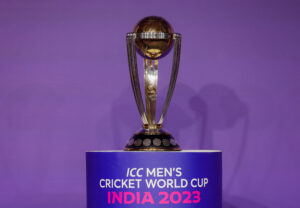
The team that wins the final match receives an identical replica trophy. This replica is visually indistinguishable from the original in every single structural metric, except for one minor detail: the inscriptions on the base. The replica only features the history of that specific winning team’s glory, whereas the original contains a continuous running log of every past world champion.
The History and Evolution
The trophy we know and love today wasn’t always the prize on offer. From the tournament’s inception in 1975 until 1996, the World Cup was heavily driven by corporate title sponsors. Because of this, the design of the trophy changed completely almost every single time a new tournament cycle rolled around.
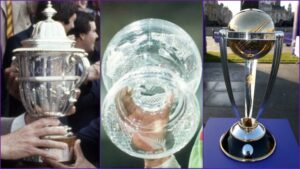
1. The Prudential Cup Era (1975–1983)
The first three iterations of the World Cup were held in England and sponsored by Prudential plc. The prize was a classic, traditional British silver loving-cup design. This specific trophy was lifted twice by Clive Lloyd’s legendary West Indies side, and famously once by Kapil Dev’s underdog Indian squad in 1983.
2. The Reliance Cup (1987)
When the tournament moved outside of England for the very first time to the Indian subcontinent, the sponsorship shifted to Reliance Industries. The trophy was radically redesigned, featuring a gold-plated exterior accented with diamonds, reflecting the vibrant, changing landscape of modern cricket broadcasting.
3. The Benson & Hedges Cup (1992)
Widely considered one of the most aesthetically unique tournaments, the 1992 edition in Australia and New Zealand featured colored clothing, white balls, and day-night games. The trophy matched this futuristic shift: it was a magnificent, massive crystal bowl crafted by Waterford Crystal, glowing under the floodlights when Imran Khan famously hoisted it for Pakistan.
4. The Wills Cup (1996)
Returning to the subcontinent in 1996, the tournament was sponsored by Wills. This era featured a highly ornate, industrial silver-gilt structure with intricate handles, famously claimed by Sri Lanka in a historic underdog run.
5. The Permanent ICC Era (1999–Present)
Tired of the constant visual shifts and wanting to establish a definitive brand identity similar to football’s FIFA World Cup, the ICC stepped in ahead of the 1999 tournament in England. They commissioned the permanent Garrard design, ensuring that moving forward, every single generation of cricketers would compete for the exact same iconic imagery.
Which Teams Have Held It Most?
Since the permanent cricket world cup trophy design was introduced in 1999, one nation has historically dominated its possession. Australia has asserted incredible dominance over the modern era, securing the permanent trophy design a record-breaking five times (1999, 2003, 2007, 2015, and 2023).
India has lifted this specific version once during their historic 2011 home campaign led by MS Dhoni, while England claimed it during the unforgettable 2019 boundary-countback final at Lord’s.
Frequently Asked Questions (FAQs)
What is the cricket world cup trophy made of?
The trophy is structurally constructed out of high-grade sterling silver. It features three silver pillars shaped like stumps and bails, which support a central, highly polished golden globe that is heavily coated in pure yellow gold plating.
How much does the official cricket world cup trophy weigh?
The official trophy weighs exactly 11.05 kilograms (approximately 24.3 pounds). Its heavy build requires considerable effort to hold aloft with extended arms during long post-match celebrations.
Who designed the modern ICC trophy?
The modern permanent trophy was designed and meticulously handcrafted by a specialized team of jewelers at Garrard & Co in London. The company completed the initial prototype over a rigid two-month production window in early 1999.
Can winning players take the original trophy home?
No. The actual original trophy is kept under high security by the ICC at their main offices in Dubai. The winning national cricket board is given an official, identical replica to keep in their home country’s trophy cabinets permanently.
https://cricalien.com/different-types-of-pitches-in-cricket-explained/