

Top 10 Biggest Cricket Stadium in the World by Capacity: The Ultimate Guide
Few sporting spectacles match the raw energy of a massive cricket stadium packed to the rafters. When tens of thousands of fans roar in unison under the floodlights, the atmosphere turns a simple game into an unforgettable, core-memory event.
For decades, the title of the world’s largest cricket venue was a settled debate. However, a massive wave of recent infrastructure spending across the globe has completely rewritten the record books. If you are curious about which grounds hold the absolute maximum number of spectators, you are in the right place.
This comprehensive guide breaks down the top 10 biggest cricket stadiums in the world by official seating capacity, diving into their rich histories, defining architectural landmarks, and the unique match-day experiences they offer to fans.
Table of Contents
The Top 10 Biggest Cricket Stadiums Globally
To provide an immediate, clear overview, here is how the world’s largest venues stack up against one another based on verified seating capacity.
| Rank | Cricket Stadium | Capacity | |
|---|---|---|---|
| 1 | Narendra Modi Stadium |
| 132,000 |
| 2 | Melbourne Cricket Ground (MCG) | 100,024 | |
| 3 | Eden Gardens | 68,000 | |
| 4 | Shaheed Veer Narayan Singh Stadium | 65,000 | |
| 5 | Perth Stadium (Optus Stadium) | 61,266 | |
| 6 | Rajiv Gandhi International Stadium | 55,000 | |
| 7 | Greenfield International Stadium | 55,000 | |
| 8 | Adelaide Oval | 53,500 | |
| 9 | Ekana Cricket Stadium | 50,000 | |
| 10 | JSCA International Stadium Complex | 50,000 |
Deep Dive: The Giants of World Cricket
1. Narendra Modi Stadium (Ahmedabad, India) — 132,000
Sitting comfortably at the top of the pyramid, the Narendra Modi Stadium in Motera, Ahmedabad, is a true modern marvel. After a complete teardown and a ground-up rebuild completed in 2020, it snatched the crown as the absolute largest sports arena on the planet.
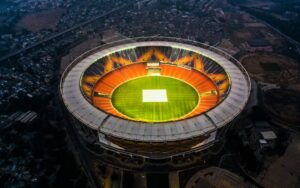
The sheer scale of this venue alters how games are experienced. It features a circular design that gives every single seat an completely unobstructed view of the playing field. The arena boasts 76 corporate boxes, an Olympic-sized swimming pool, and an innovative LED floodlight system built directly into the roof structure instead of traditional high towers. This structural shift completely eliminates shadows on the field, giving high-flying catches a remarkably clean background for players and TV broadcast cameras alike.
Featured Snippet Opportunity:
Which is the biggest cricket stadium in the world?
The biggest cricket stadium in the world is the Narendra Modi Stadium located in Ahmedabad, India. It has a verified seating capacity of 132,000 spectators, making it the largest stadium of any sport globally.
2. Melbourne Cricket Ground (MCG) (Melbourne, Australia) — 100,024
Affectionately known to locals simply as “The ‘G,” the Melbourne Cricket Ground is the spiritual home of Australian sport. Established all the way back in 1853, it held the title of the world’s biggest cricket stadium for over a century before the Motera reconstruction.
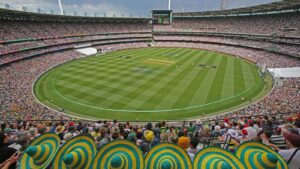
The MCG is globally renowned for its electric atmosphere, especially during the iconic Boxing Day Test match held every winter. Unlike some of the newer, purpose-built cricket venues, the MCG is a massive multi-sport amphitheater that has hosted Olympic Games and world-class football matches. Its deep boundaries and historic light towers give it an imposing, cathedral-like presence that intimidates visiting teams.
3. Eden Gardens (Kolkata, India) — 68,000
If the MCG is Australia’s spiritual home, Eden Gardens is widely considered the “Mecca of Indian cricket.” While its capacity was scaled back from an estimated 100,000 down to 68,000 during extensive renovations to meet modern safety compliance and comfort standards, it lost absolutely none of its legendary acoustic power.
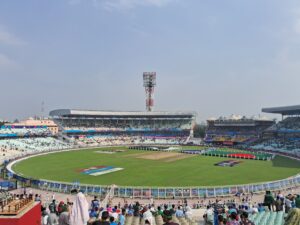
The crowd noise at Eden Gardens is famously intense, creating a physical wall of sound that has rattled some of the greatest players in cricket history. Established in 1864, it remains a bucket-list venue for any cricket purist.
4. Shaheed Veer Narayan Singh Stadium (Raipur, India) — 65,000
A relatively fresh entry to the top tier, this magnificent facility in Naya Raipur highlights India’s aggressive push to build world-class cricket stadium assets outside of traditional metro hubs.
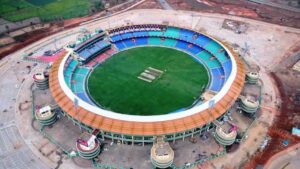
Though it has hosted fewer international matches compared to legacy grounds like Eden Gardens, its massive 65,000 capacity regularly sells out for domestic leagues and T20 exhibition matches, proving that the appetite for live cricket is boundless across regional India.
5. Perth Stadium (Optus Stadium) (Perth, Australia) — 61,266
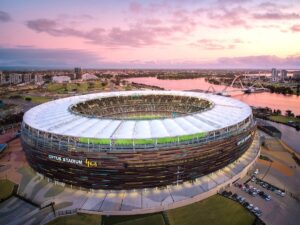
Opened in 2018 to replace the historic but aging WACA ground, Perth Stadium is a state-of-the-art facility designed entirely with the fan experience in mind. It balances a massive seating capacity with premium acoustics, a lightweight fabric roof that covers over 80% of the seating bowl, and a stunning view of the Swan River. The drop-in pitches engineered here mirror the lightning-fast pace and steep bounce that Western Australia is famous for.
The Modern Stadium Infrastructure Evolution
The construction of these mega-stadiums isn’t just about fitting more seats; it represents a major leap forward in engineering and fan safety. Over the last decade, cricket stadium design has shifted focus toward rapid-drainage outfields, high-end spectator amenities, and multi-purpose usage.
For example, a common structural challenge for massive stadiums is recovering from unpredictable weather. Modern venues solve this by embedding sub-surface aeration systems beneath the turf. These advanced systems can clear thousands of liters of surface water per minute, allowing play to resume mere minutes after a heavy downpour stops—a crucial feature for protecting television broadcast windows and keeping fans happy.
Additionally, recent high-profile debates led by cricket administrators highlight a major push to transform these massive locations into 365-day entertainment hubs. The goal is to integrate shopping complexes, modern restaurants, and automated crowd-flow systems, ensuring these massive investments generate community value even during the off-season.
Read more:
https://cricalien.com/the-ultimate-guide-to-the-fastest-centuries-in-cricket/
How Seating Capacity Impacts Pitch Conditions and Strategy
It’s a lesser-known fact among casual fans, but the physical size of a cricket stadium directly shapes how a match unfolds on the pitch.
- Boundary Sizes: Larger stadiums typically feature much deeper boundaries. At a ground like the MCG or Perth Stadium, batters can’t simply rely on clearing the ropes for six; they must be exceptionally fit to run hard twos and threes.
- Wind and Drift: The towering grandstands of a 100,000-seat stadium create unique wind-tunnel effects. Savvy spin bowlers use these localized air currents to get late “drift and dip” on the ball, deceiving the batter in flight.
- The Intimidation Factor: The psychological weight of playing in front of a massive crowd changes team strategies. Captains often opt to bat first after winning the toss at high-capacity venues, aiming to put runs on the board early and let the intense crowd pressure wear down the chasing side.
Frequently Asked Question
1.Which is the world no. 1 cricket stadium?
Narendra Modi Stadium is often considered the world’s No. 1 cricket stadium because of its huge capacity, facilities, and modern design.
2. Which country has the best cricket stadium?
India is widely considered to have some of the best cricket stadiums due to large venues, passionate fans, and world-class infrastructure.
3. Which is the best cricket stadium?
The best stadium depends on preference, but Melbourne Cricket Ground and Narendra Modi Stadium are among the most famous.
4. What are the top 10 stadiums in the world?
Popular top stadiums include Narendra Modi Stadium, Melbourne Cricket Ground, Lord’s, Eden Gardens, The Oval, Sydney Cricket Ground, Wankhede Stadium, Gaddafi Stadium, Newlands, and Perth Stadium.
5. Which are the 3 biggest stadiums in India?
The biggest are Narendra Modi Stadium, Eden Gardens, and Shaheed Veer Narayan Singh International Cricket Stadium (by listed capacity).
6. What is Virat Kohli’s favourite stadium?
Virat Kohli has praised several grounds, but M. Chinnaswamy Stadium is often associated with him because of his Royal Challengers Bengaluru connection.
7. Which is the world’s highest cricket stadium?
Himachal Pradesh Cricket Association Stadium is one of the highest international cricket stadiums in the world.
8. What are the top 5 biggest stadiums?
The top five biggest cricket stadiums include Narendra Modi Stadium, Melbourne Cricket Ground, Eden Gardens, Shaheed Veer Narayan Singh Stadium, and Perth Stadium.
9. What are the top 20 biggest stadiums in the world?
The list includes major grounds from India, Australia, England, South Africa, Pakistan, and other cricket-playing nations, ranked by seating capacity.
10. What are the 10 biggest stadiums of India?
Major large Indian stadiums include Narendra Modi Stadium, Eden Gardens, Raipur Stadium, Wankhede Stadium, Arun Jaitley Stadium, and other state cricket grounds.
11. Which is the largest stadium on Earth?
Narendra Modi Stadium is the largest cricket stadium and one of the largest sports stadiums in the world.
12. Which stadium has 60,000 capacity?
Several cricket stadiums have around 60,000 capacity, including Melbourne Cricket Ground (over 90,000) and some large international grounds around the world.